
Never miss an offer or update. You can unsubscribe at any time.
The BACnet-compliant wired or wireless thermostats ensure integration into BACnet/IP (Wi-Fi) or BACnet MS/TP networks. These thermostats are suited for single or multi-stage heating, cooling and ventilation. Configurable control algorithm parameters allow adaptability to the specific application. Built in temperature sensor, input for remote temperature sensor, or temperature override network command for Building Automation System. There’s also possibility built-in relative humidity sensor allows the thermostat to display relative humidity on the screen on the color screen controller FT-CS01 or FT-CS03.Digital display with graphical icons is easy to read and understand.
Product Details
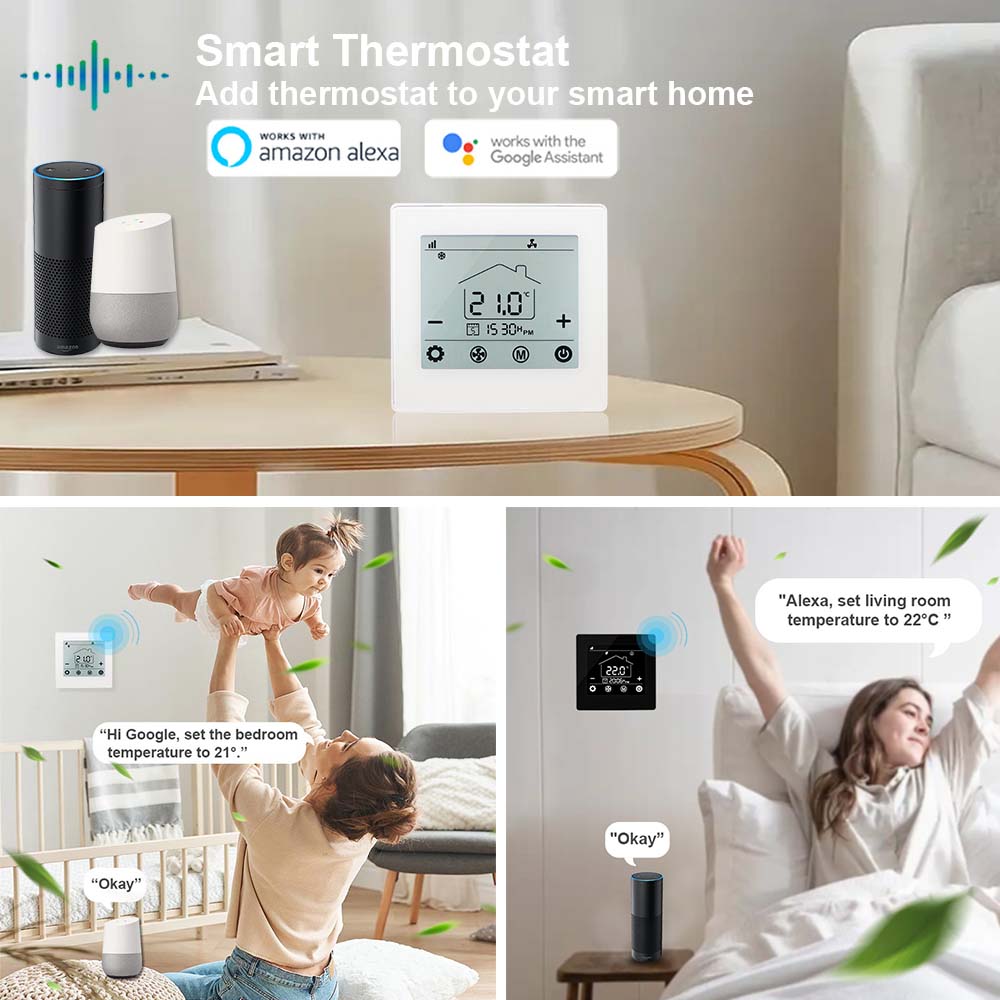
The FT-09 Bacnet Thermostat’s white backlit LCD display is large and easy to read, even from a distance. It incorporates graphical icons of current state of operation. Several icons indicate parameters such as: Working Mode, fan speed, clock icon, schedule indication.
Five buttons on the FT-09 allow users to manipulate temperature set point, change HVAC modes, turn the thermostat ON/OFF, and more. All 5 buttons are lockable in a configurable manner to prevent unauthorized configuration change. Some or all buttons can be locked for application flexibility, making the stat suitable for applications where limited user control is allowed.
Sometimes the ideal location to install the thermostat is not the ideal location to capture a correct representation of the temperature in the room, either because it is near a draft, exposed to sunlight, directly under a ceiling fan, near exterior doors or close to equipment that create hot or cold air. In that scenario, a remote temperature sensor is necessary for getting the environment temperature.
 Address:No.6 of Tong'an Industrial Park, Meixi Rd,Tong'an District, Xiamen China 361100
 Phone:+86 0592 6155792
 Email:[email protected]