
Never miss an offer or update. You can unsubscribe at any time.
At E-TOP Controls, product reliability is our highest priority. To guarantee a zero-defect rate for our global B2B partners, our ISO9001:2015 and ISO14001:2015 certified factory is equipped with industry-leading quality control (QC) equipment. From raw material inspection to final environmental stress testing, we validate every smart thermostat to meet rigorous international standards.
Our comprehensive testing laboratory houses diverse material inspection devices, electromagnetic compatibility (EMC) testing systems, and extreme environmental chambers. This ensures our HVAC controllers perform flawlessly even in harsh commercial environments and long-term operations.
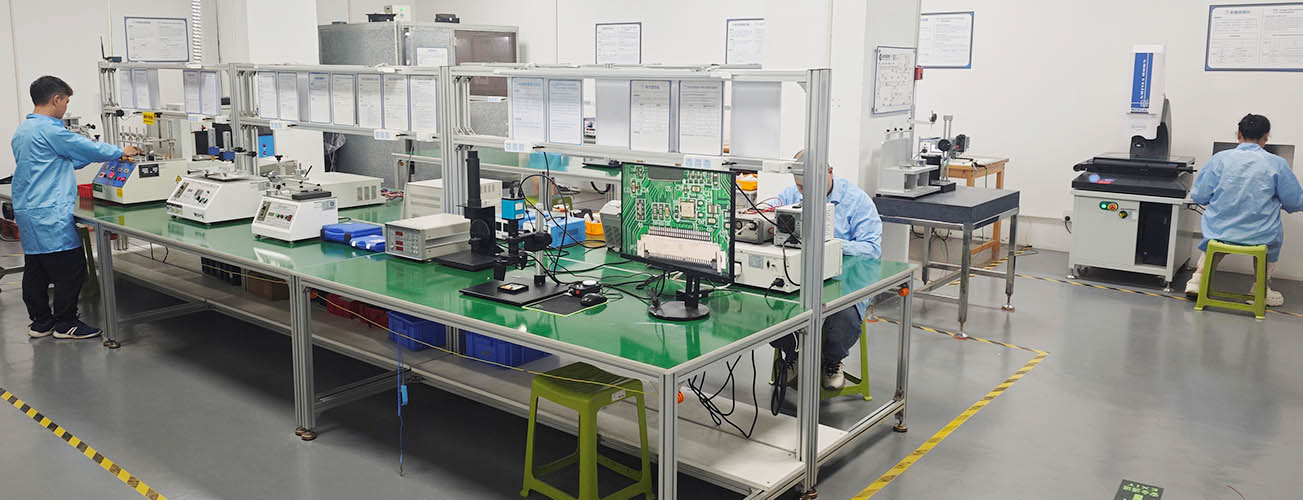
Panoramic view of our dedicated quality control and product validation laboratory.
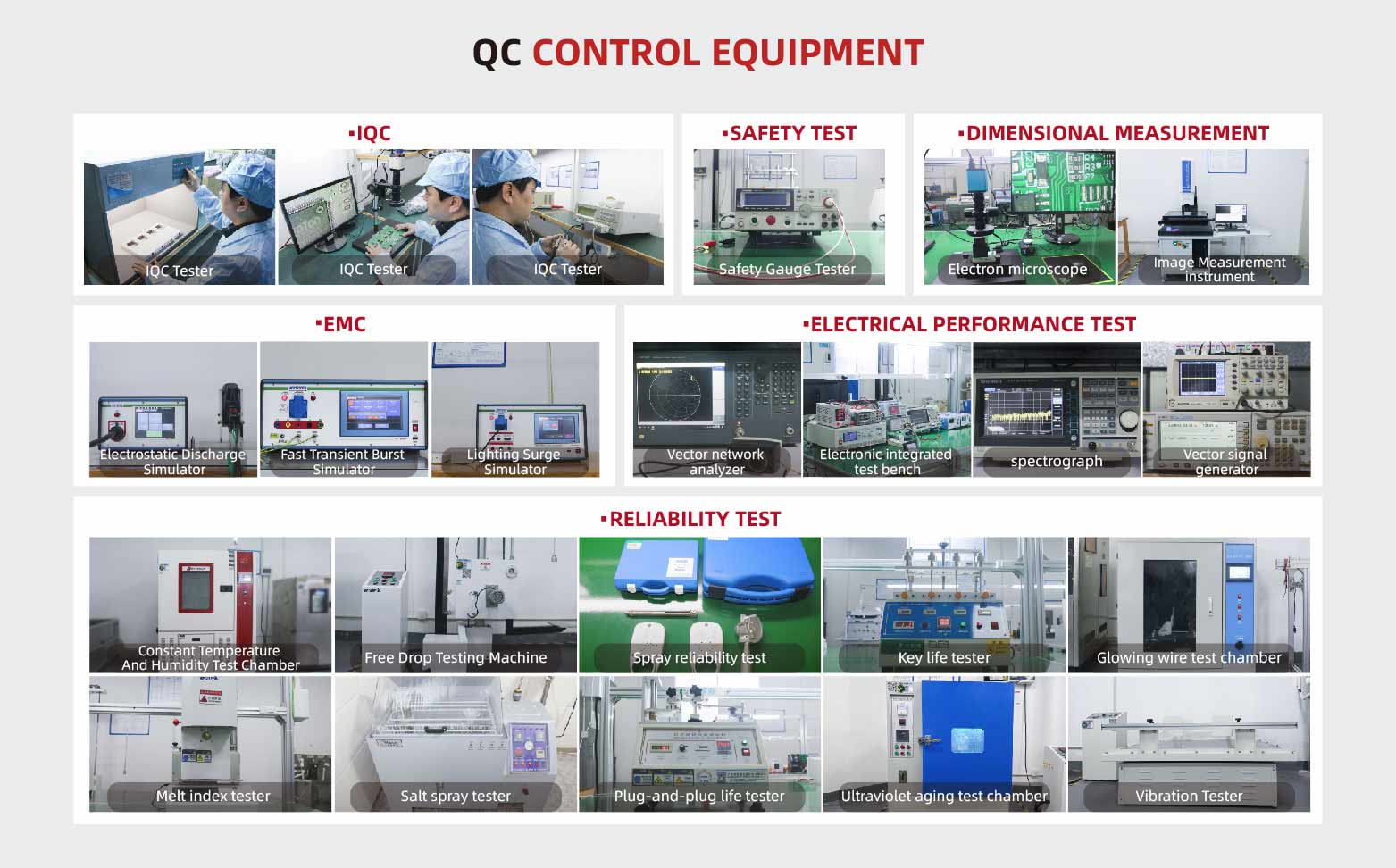
High-precision EMC and inspection devices ensuring signal stability and electrical safety.
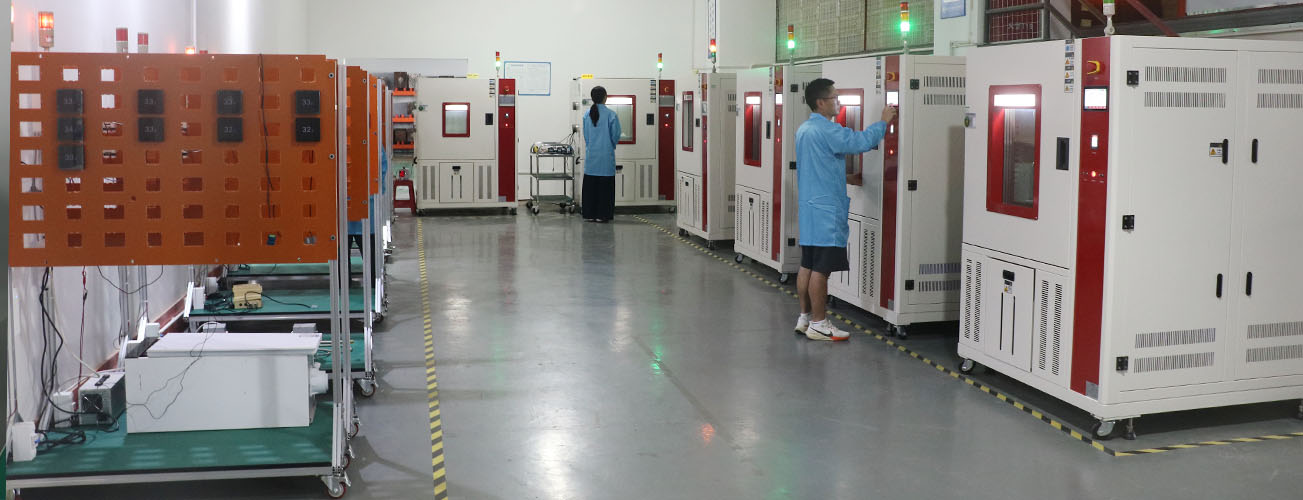
High and low temperature testing chambers used for system durability and reliability validation.
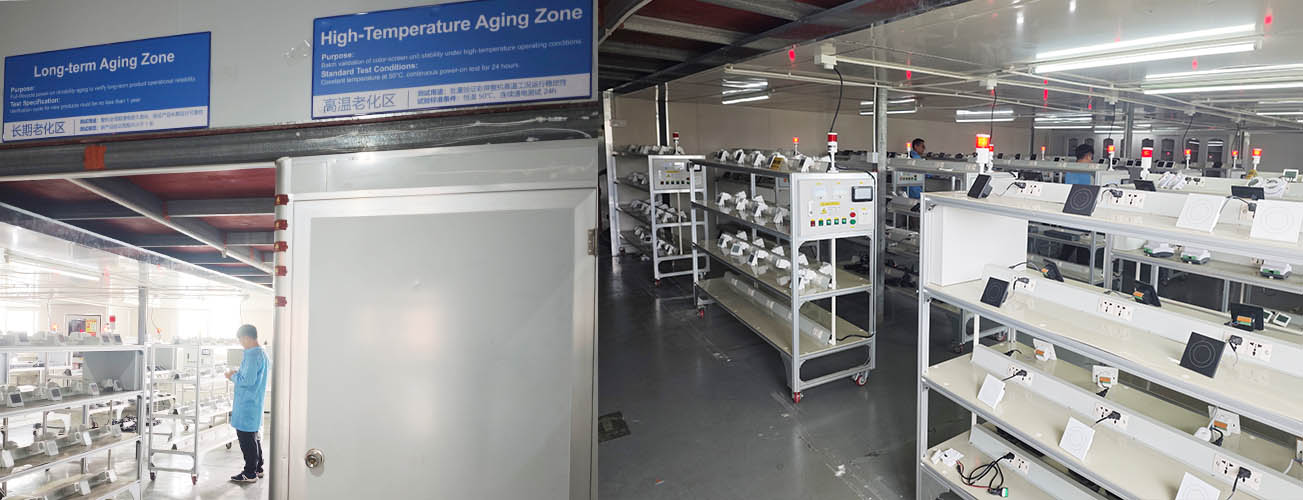
High-temperature burn-in and long-term aging areas designed to screen out early-life component failures.
Hardware durability is only half the equation. Legacy thermostats rely on crude relay switching delivering only 0% or 100% power with no intermediate levels, causing uncomfortable temperature fluctuations. To solve this, E-TOP heavily invests in software validation inside extreme climate chambers to refine our PID & PWM Control Algorithms.
Operating on a fixed time cycle, PWM smoothly adjusts the active high-level duty cycle to deliver variable average power. Simultaneously, the PID algorithm dynamically calculates and changes this duty cycle based on real-time temperature gaps. This achieves perfectly constant temperature control, maximizing energy savings and protecting expensive HVAC equipment from the thermal stress of short-cycling.
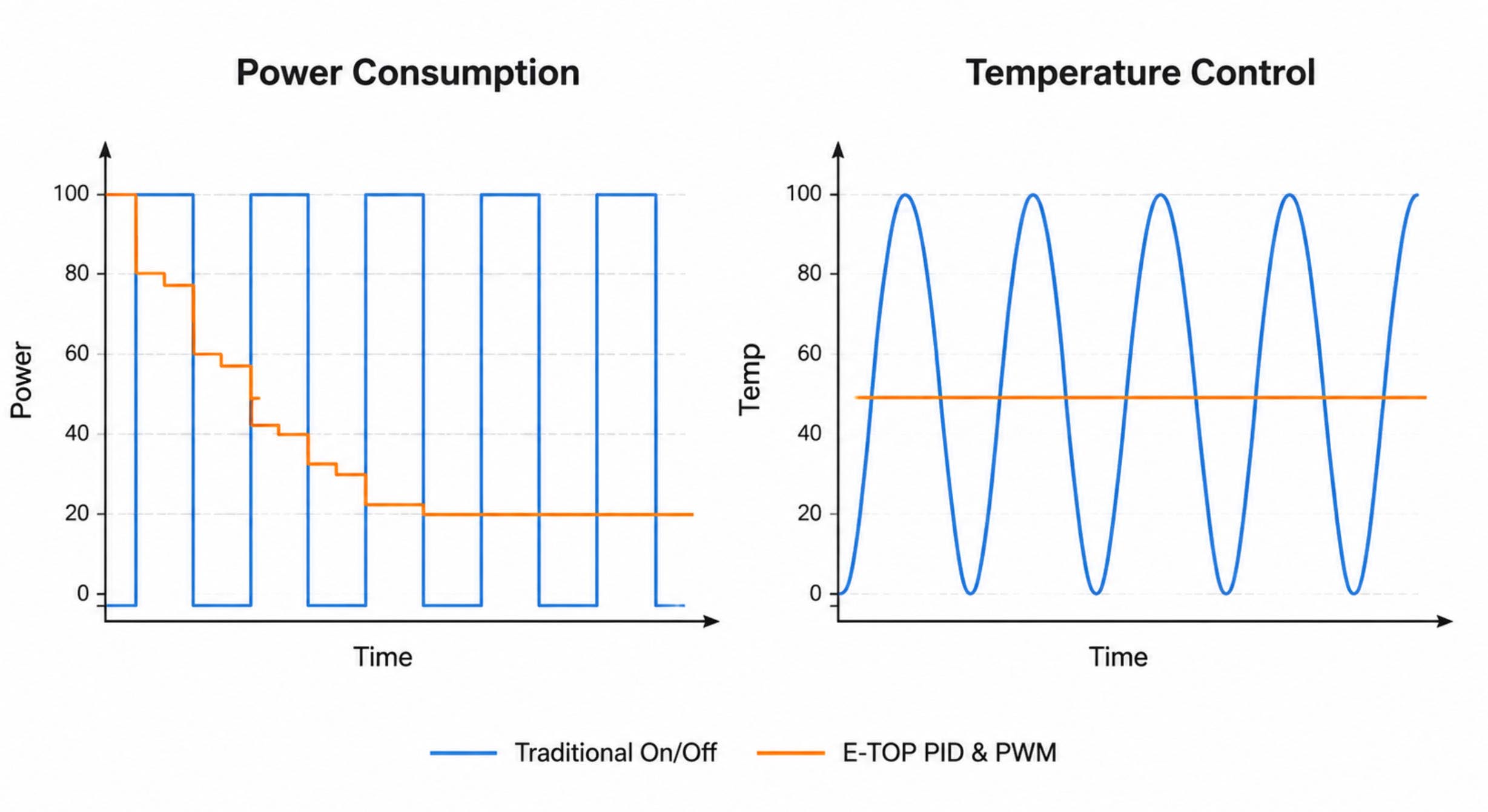
Data loggers tracking the PID algorithm's ability to prevent temperature overshoot in real-time.
Quality is our signature. Every E-TOP thermostat undergoes a complete IQC/IPQC/FQC process in our professional validation lab. To ensure global market access and user safety, our products are rigorously tested to carry the world's most recognized safety and connectivity marks:
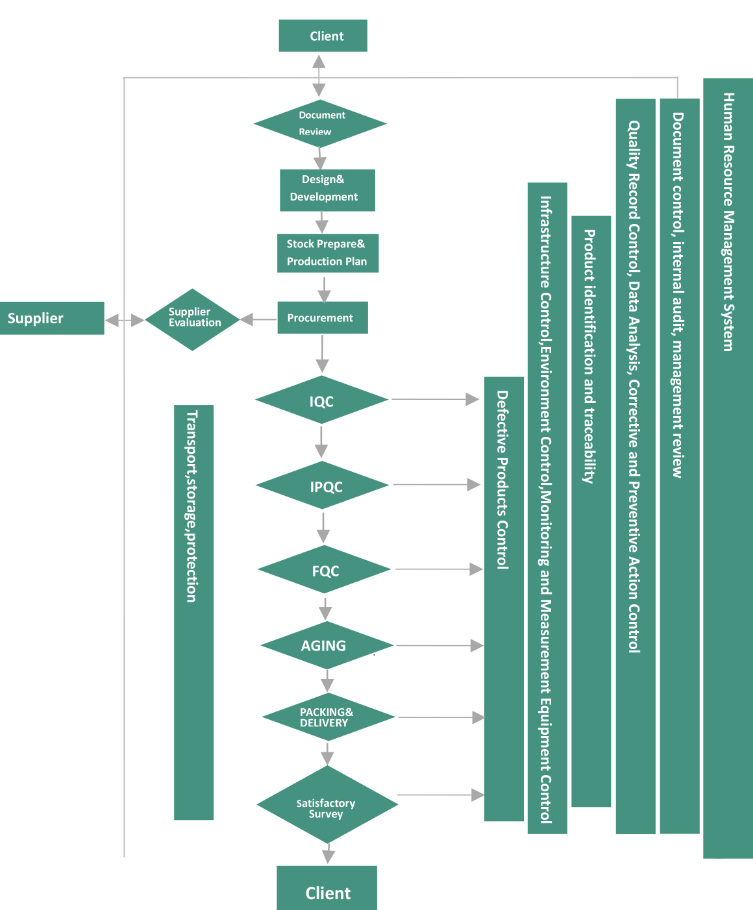
We implement a closed-loop quality management system. From Incoming Quality Control (IQC) for raw materials to In-Process Quality Control (IPQC) on the SMT lines, and Final Quality Control (FQC) before shipping, every step is strictly documented. Please refer to our standard QC progress chart below:
Our rigorous testing standards ensure that every unit performs flawlessly in the field. Explore our Wholesale HVAC Controls Catalog or discover how we can customize hardware through our Thermostat OEM & ODM Solutions.
Request a QuoteA: For wireless models (WiFi, Zigbee, 868MHz RF), we utilize specific EMC testing equipment and signal range validation rooms to ensure they meet strict European RED (Radio Equipment Directive) standards, preventing signal drops in complex building structures.
A: The climate chamber simulates how a real room gains and loses heat. We test the firmware's PID logic in this controlled environment to ensure the thermostat learns the thermal inertia correctly, which eliminates temperature overshoot and protects the HVAC equipment from short-cycling.
A: Yes. Beyond standard batch spot-checks, 100% of our assembled PCBA boards undergo automated optical inspection (AOI) and rigorous power-on aging tests (burn-in) to weed out early-life electrical failures before packaging.
 Address:No.6 of Tong'an Industrial Park, Meixi Rd,Tong'an District, Xiamen China 361100
 Phone:+86 0592 6155792
 Email:[email protected]